Watercolor Blue Baby Boy Pattern Guide
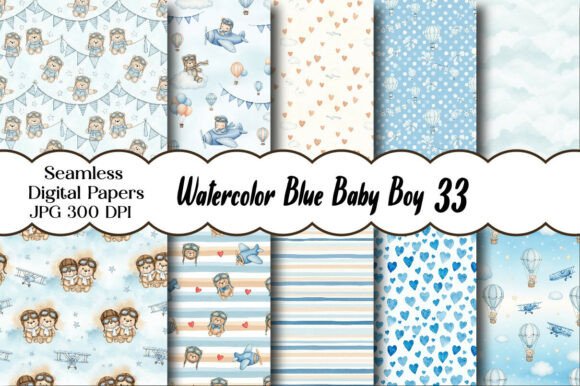
There is a distinct quietude to the color blue when rendered in watercolor. It does not shout; it whispers. For designers and creators working within the niche of early childhood, finding assets that capture this gentle essence without slipping into cliché is a constant challenge. The Watercolor Blue Baby Boy Pattern emerges as a solution that balances artistic integrity with commercial versatility. It is not merely a background; it is a textured narrative element that brings depth, warmth, and a handcrafted feel to digital and physical products alike.
This seamless design operates on the principles of organic imperfection. Unlike rigid geometric vectors or flat digital fills, watercolor textures retain the memory of the brush. You see the pooling of pigment, the subtle gradients where water meets paper, and the soft, bleeding edges that define the medium. When applied to baby-centric ventures, this aesthetic communicates care, tenderness, and a premium quality that mass-produced graphics often lack. It serves as an endearing foundation for a diverse array of projects, from newborn announcements to nursery wall art, allowing creators to infuse a touch of refined charm into their work.
The Aesthetic Appeal and Visual Psychology
Understanding why this pattern works requires looking at the intersection of color psychology and texture perception. Blue, particularly in its softer, muted iterations, is universally associated with calmness, stability, and trust. For parents navigating the sleep-deprived early days of infancy, these are not just abstract concepts; they are desired states of being. The watercolor style amplifies this effect. The fluidity of the paint suggests movement and life, yet the cool tones keep the energy grounded and serene.
The Watercolor Blue Baby Boy Pattern avoids the harshness of primary colors. Instead, it leans into a palette of slate, sky, and powder blues, often intermixed with faint whites and grays that mimic the texture of high-quality cotton paper. This understated approach makes it incredibly adaptable. It does not compete with foreground elements such as typography or photography. Instead, it supports them. In editorial design or packaging design, this supportive role is crucial. A busy background can render text unreadable, but a washed-out watercolor texture provides enough contrast to anchor content while maintaining visual interest.
For brand strategists, this visual language helps establish a specific brand identity. If your target audience values sustainability, handmade quality, or minimalist elegance, this pattern aligns perfectly with those values. It signals that the product inside—whether it is a onesie, a candle, or a printed book—has been curated with attention to detail. It moves the perception of the item from a commodity to a keepsake.
Versatility Across Commercial and Personal Projects
The true value of a seamless pattern lies in its scalability and adaptability across different mediums. The Watercolor Blue Baby Boy Pattern is delivered as a high-resolution JPG file at 300 DPI, ensuring that it retains its clarity whether viewed on a smartphone screen or printed on large-format fabric. This technical specification is vital for professional use, preventing pixelation and ensuring crisp output in print production.
Consider the range of applications for small business owners and crafters. In the realm of sublimation merchandise, this pattern transforms plain white mugs, tumblers, and phone cases into sophisticated gifts. The watercolor texture bonds well with sublimation inks, preserving the nuanced gradients that define the style. For those involved in textile design, the pattern can be printed onto cotton blends for baby blankets, burp cloths, or nursery curtains. The soft hues complement a wide variety of interior design schemes, making it a safe yet stylish choice for gift-givers.
Digital applications are equally robust. Social media managers and content creators can use the pattern as a backdrop for Instagram stories, Pinterest pins, or website banners. It provides a cohesive look for social media graphics, helping to build recognition across platforms. Because the pattern is seamless, it can be tiled infinitely without visible breaks, allowing for flexible layout adjustments in web design or email marketing templates. It also serves as an excellent base for digital paper packs, which are popular among users of digital planning apps and scrapbooking software.
Furthermore, the pattern enhances tangible party elements. Imagine baby shower invitations printed on textured cardstock with this blue wash behind elegant serif typography. Or consider custom labels for soap and candles, where the organic feel of the watercolor complements natural ingredients. Even small details like decaled party napkins, gift tags, and bookmarks benefit from this cohesive aesthetic. It turns standard items into curated experiences.
Practical Implementation and Design Best Practices
Integrating the Watercolor Blue Baby Boy Pattern into your workflow requires a thoughtful approach to layering and composition. While the pattern is beautiful on its own, its primary function in most design contexts is to support other elements. Here are practical guidelines for maximizing its impact:
- Mind the Contrast: Since the pattern is light and airy, ensure that any text or logos placed over it have sufficient contrast. Dark navy, charcoal, or deep forest green typography works exceptionally well. Avoid placing white or very light yellow text directly over the lighter areas of the watercolor wash, as readability will suffer.
- Opacity Adjustments: Do not hesitate to lower the opacity of the pattern layer in your design software. Reducing it to 70% or 80% can create a more subtle watermark effect, allowing foreground images or illustrations to pop without losing the textured background entirely.
- Font Pairing Strategy: The organic nature of watercolor pairs beautifully with both serif fonts and handwritten script fonts. A classic serif adds a touch of tradition and authority, suitable for birth announcements. A flowing script adds personality and warmth, ideal for birthday celebrations. Avoid overly industrial or geometric sans-serif fonts unless you are aiming for a specific modern-minimalist juxtaposition.
- Crop and Focus: Although the file is seamless, specific sections of the watercolor wash may have more interesting pigment pooling than others. Experiment with cropping the image to highlight the most dynamic parts of the texture for smaller items like stickers or candle labels.
For entrepreneurs, licensing is a key consideration. This asset is designed for commercial use, meaning you can incorporate it into products you sell. However, always review the specific license terms provided with the download. Typically, this means you can use the pattern on end products (like a printed pillow) but cannot resell the digital file itself as a standalone asset. Understanding these boundaries protects your business and respects the creator’s intellectual property.
When evaluating project fit, ask yourself: Does this design need to feel soft? Does it need to evoke nostalgia or calm? If the answer is yes, this pattern is a strong candidate. If the project requires high-energy, vibrant, or corporate aesthetics, it may not be the right tool. Knowing when not to use a design asset is as important as knowing when to use it.
Ultimately, the Watercolor Blue Baby Boy Pattern is more than a decorative element. It is a versatile design tool that bridges the gap between digital convenience and artistic authenticity. By understanding its visual characteristics and applying it with intention, designers and makers can create products that resonate emotionally with their audience. In a market saturated with generic clip art, offering something with texture, depth, and genuine artistic merit sets your work apart. It invites the viewer to pause, look closer, and appreciate the craftsmanship behind the design.