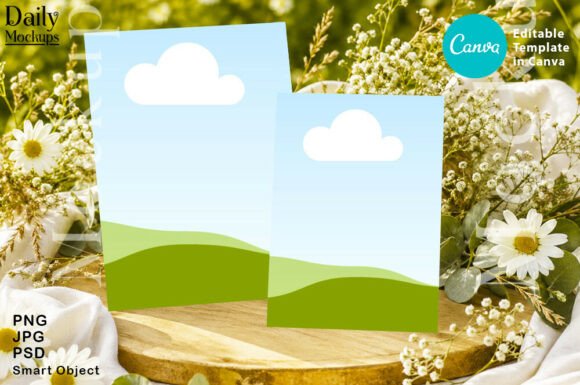
Enhancing Your Design Workflow with a Two 5x7 Card Invitation Mockup
In the competitive landscape of digital design and stationery sales, the gap between a functional layout and a compelling product often comes down to presentation. Whether you are an independent designer selling on Etsy, a branding specialist preparing client proofs, or a hobbyist planning a significant life event, the way you visualize your work matters immensely. This is where a Two 5x7 Card Invitation Mockup becomes an essential asset in your creative toolkit. It is not merely a decorative image; it is a strategic tool that bridges the gap between abstract digital files and tangible, physical reality.
Integrating high-quality mockups into your workflow allows for better decision-making, faster client approvals, and more effective marketing. By understanding how to leverage this specific template—featuring folded portrait cards on a rustic wood board surrounded by daisies and soft florals—you can streamline your production process and elevate the perceived value of your designs.
The Strategic Role of Mockups in Design Processes
A mockup serves as a visual prototype. In professional workflows, it is used to simulate how a final printed product will look in a real-world setting. For invitation designers, this is critical because paper goods are tactile experiences. Clients and customers struggle to envision how a flat digital PDF will translate into a physical object. A well-crafted mockup provides context, lighting, texture, and scale, removing ambiguity from the evaluation process.
Using a Two 5x7 Card Invitation Mockup specifically targets the standard invitation size, ensuring that proportions are accurate. The "folded portrait" aspect adds another layer of realism, showing how the card opens and how the interior design interacts with the exterior. This level of detail helps stakeholders assess readability, color harmony, and overall aesthetic appeal before any printing costs are incurred.
Pre-Production: Refining Concepts and Colors
Before finalizing a design, mockups act as a testing ground. When you place your artwork into the smart object layers of a PSD file or edit directly in Canva, you immediately see how your chosen typography and colors interact with the background elements. In this specific template, the rustic wood board and soft floral surroundings provide a warm, organic context. If your design uses cool, modern minimalism, the contrast might highlight a mismatch in tone. Conversely, earthy tones and hand-lettered fonts may harmonize beautifully, confirming your design direction.
This stage is about iteration. You can quickly swap out color palettes or font pairings within the mockup environment. Because the template includes realistic shadows and lighting effects, you can judge legibility under simulated natural light. This prevents common errors, such as choosing text colors that look vibrant on a bright screen but disappear when printed on textured paper or viewed in dim lighting.
Client Presentations and Approval Workflows
For freelancers and agencies, the approval phase is often a bottleneck. Sending a flat JPEG of a design via email can lead to misinterpretation. Clients may focus on minor pixel-level details rather than the overall composition. By presenting your work within a Two 5x7 Card Invitation Mockup, you shift the conversation toward the emotional impact and practical application of the design.
The inclusion of daisies and soft florals in the scene creates an aspirational narrative. It suggests a mood—romantic, rustic, gentle—that helps the client connect emotionally with the project. When clients can visualize the end result in a beautiful setting, they are more likely to approve designs quickly and with confidence. This reduces revision cycles and accelerates the project timeline.
Technical Integration and Compatibility
One of the strongest advantages of this particular asset is its dual compatibility with both Adobe Photoshop and Canva. This flexibility ensures that it fits seamlessly into diverse technical workflows, regardless of your preferred software ecosystem.
Leveraging Photoshop Smart Objects
For professional designers, the included PSD file with smart objects is indispensable. Smart objects allow for non-destructive editing. You can place your design file into the designated layer, and the template automatically applies perspective warping, shadows, and highlights to match the fold of the card and the angle of the shot. This ensures that the mockup looks photorealistic without requiring manual adjustment of lighting effects.
The high resolution of the file—3000 x 2200 pixels at 300 DPI—means that the output is suitable for large-format displays or high-quality print portfolios. This level of detail is crucial for maintaining professionalism in branding previews or printed lookbooks. The transparent background PNG option further enhances usability, allowing you to composite the mockup into different backgrounds if needed for specific marketing campaigns.
Simplifying with Canva
Not all users have access to Adobe Creative Cloud, nor do they need its complexity. The inclusion of a Canva link makes this Two 5x7 Card Invitation Mockup accessible to a broader audience, including small business owners, educators, and hobbyists. Canva’s user-friendly interface allows for quick customization of colors, fonts, and images through simple drag-and-drop actions.
For Etsy sellers or stationery shop owners who need to produce multiple listing images quickly, the Canva integration is a time-saver. You can duplicate the template, swap out the invitation design, and export a new JPG or PNG in minutes. This efficiency supports high-volume content creation, which is vital for maintaining an active online presence. The ability to export in various formats ensures compatibility with different social media platforms and e-commerce requirements.
Optimizing for E-Commerce and Branding
In the digital marketplace, your product image is your storefront. For sellers on platforms like Etsy, Shopify, or personal websites, the quality of your mockup directly influences conversion rates. A generic, flat display of a digital file fails to convey value. In contrast, a lifestyle-oriented mockup tells a story.
Creating Cohesive Brand Aesthetics
Consistency is key to building a recognizable brand. By using the same Two 5x7 Card Invitation Mockup across multiple product listings, you create a cohesive visual identity. Customers begin to associate the rustic, floral aesthetic with your brand’s style. This consistency builds trust and professionalism.
Moreover, the neutral yet elegant nature of the wood and daisies allows your design to remain the focal point. It does not overpower the artwork but complements it. This balance is essential for showcasing a variety of designs without them clashing with the background. Whether you are selling wedding invitations, birthday cards, or corporate event stationery, this template provides a versatile stage for your creations.
Enhancing Social Media Marketing
Beyond product listings, mockups are powerful tools for social media marketing. Platforms like Instagram and Pinterest thrive on visually appealing, lifestyle-centric content. Using this mockup, you can create engaging posts that showcase your designs in context. You might pair the image with behind-the-scenes captions about your design process, tips for choosing invitation paper, or stories about the events these cards celebrate.
The high-quality JPG and PNG files provided in the download are optimized for digital sharing. They load quickly while retaining sharpness, ensuring that your content looks professional on both mobile devices and desktop screens. This attention to detail reflects positively on your brand and encourages shares and saves, expanding your reach organically.
Practical Tips for Implementation
To get the most out of your Two 5x7 Card Invitation Mockup, consider the following practical steps:
- Prepare Your Files: Ensure your invitation designs are saved in high-resolution formats (PDF, PNG, or JPG) before importing them into the mockup. This prevents pixelation and ensures crisp edges.
- Check Color Profiles: If you are designing for print, work in CMYK color mode in Photoshop. For digital-only previews, RGB is sufficient. Be aware that colors may shift slightly between screen and print, and use the mockup to approximate the final look.
- Customize Thoughtfully: While the template features daisies and wood, you can adjust the brightness, contrast, or saturation in Photoshop to better match your design’s mood. In Canva, use filters sparingly to maintain a natural look.
- Organize Your Assets: Keep your mockup files organized in dedicated folders. Label versions clearly (e.g., "Wedding_Invite_Mockup_V1") to avoid confusion during revisions.
- Test Different Angles: If the template allows, experiment with cropping or zooming to highlight specific details, such as intricate foil stamping or embossing effects, if your design includes them.
Long-Term Value and Efficiency
Investing in a versatile, high-quality mockup template yields long-term benefits. Unlike custom photography, which requires time, equipment, and staging for every new design, a digital mockup can be reused indefinitely. The instant digital download format means you have immediate access to the asset, eliminating shipping delays and allowing you to start working right away.
Furthermore, the editable nature of the template ensures it grows with your skills. As you become more proficient in Photoshop or Canva, you can explore advanced customization options, such as adjusting shadow opacity or adding additional elements to the scene. This adaptability makes the Two 5x7 Card Invitation Mockup a sustainable resource for your creative business or personal projects.
In conclusion, integrating this mockup into your workflow is not just about aesthetics; it is about efficiency, clarity, and professionalism. It streamlines the path from concept to completion, enhances communication with clients and customers, and elevates the perceived value of your work. By leveraging the technical features and artistic composition of this template, you can focus more on creativity and less on the logistical challenges of presentation.